Zhao Zhigang’s/Cheng Ying’s "Brechtian" Discarding of the Sword
1 2025-05-09T20:18:57+00:00 Jason Wang d86f87879d5d86129032e80721c14eb51cf319fb 1 1 Clip 4: Zhao Zhigang’s/Cheng Ying’s "Brechtian" discarding of the sword. plain 2025-05-09T20:18:57+00:00 The film on YouTube. Jason Wang d86f87879d5d86129032e80721c14eb51cf319fbThis page is referenced by:
-
1
2025-05-07T00:00:07+00:00
The Orphan of Zhao
赵氏孤儿 (2005) 57 plain 2025-06-26T15:42:30+00:00Recording of Live Performance
LINKS TO THE PRODUCTION
- A video of the production with Chinese (simplified) subtitles on YouTube.
- A video of the production with Chinese (simplified) subtitles on Bilibili.
INFORMATION- Title: The Orphan of Zhao (Zhao shi gu’er 赵氏孤儿)
- Year: 2005
- Genre: Yue Opera 越剧 [Gender Straight Casting 男女合演]
- Playwright: Yu Qingfeng 余青峰
- Director: Wang Xiaoying 王晓鹰
- Cast: Zhao Zhigang 赵志刚 (as Cheng Ying 程婴), Sun Zhijun 孙智君 (as Wife of Cheng Ying 程王氏), He Ying 何英 (as Princess Zhuangji 庄姬), Xu Jie 许杰 (as Tu’an Gu 屠岸贾), Zhang Chenghao 张承好 (as Han Jue 韩厥), Qi Chunlei 齐春雷 (as Zhao Wu 赵武), Gu Aijun 顾爱军 (as Gongsun Chujiu 公孙杵臼)
- Organization: Shanghai Yue Opera House Troupe One 上海越剧院一团 (with a special guest appearance by actress He Ying as Princess Zhuangji特邀演员 何英)
- Duration: 156 minutes
INTRODUCTION
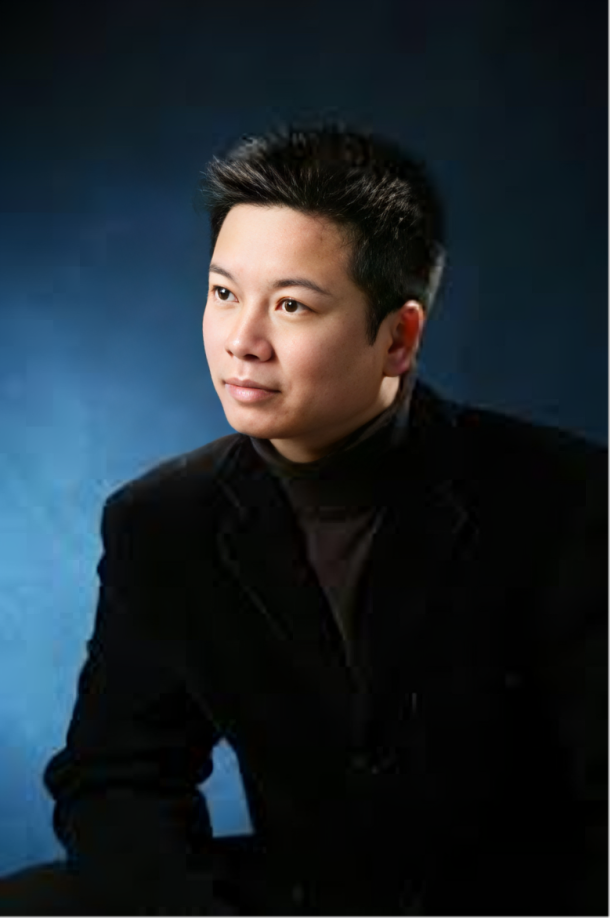
Since the 1940s, all-female casting and a “feminine aesthetic” has characterized Yue opera (Jiang, Women Playing Men, 2011), but gender-straight casting is not unknown. In 2005, the Shanghai Yue Opera House Troupe One (Shanghai Yueju yuan Yituan 上海越剧院一团), a company known for its gender-straight performances, produced a new rendition of the The Orphan of Zhao. This new adaptation starred the male actor Zhao Zhigang 赵志刚 (b. 1962-), the most renowned contemporary male Yue opera artist among the fifty or so active male Yue opera performers. Previously, in the TV Yue opera series Prince of the Desert (Shamo wangzi 沙漠王子), Zhao Zhigang had portrayed the Mongolian Prince Luolan 罗兰王子. This role famously earned him the nickname “Prince of Yue Opera” (Yueju wangzi 越剧王子), a moniker that explicitly draws attention to his male identity. In 2004, he won the coveted Plum-Blossom Award (Meihua jiang 梅花奖), the equivalent of a Tony or Academy award for traditional Chinese opera. In a reference to the Prospect Garden inhabited by a bevy of female beauties and a single male youth in the novel The Dream of the Red Chamber (Honglou meng 红楼梦), Zhao sometimes jokingly likens himself to the novel’s main male character Jia Baoyu 贾宝玉.
In The Orphan, Zhao Zhigang portrayed Cheng Ying, the doctor who saves the eponymous orphan. Performing the role of Cheng Ying makes particular demands on an actor. Wang Xiaoying 王晓鹰 (b. 1957-) the celebrated spoken drama director responsible for the Yue opera adaptation of The Orphan of Zhao, insightfully notes:When I say [that The Orphan is] intense. . . I mean that the external dramatic plot is so cruel that it far exceeds the logic and dilemmas of everyday life. This cruelty forces the character to make difficult life choices that far exceed ordinary happiness or sadness. When making this kind of life choice, you must directly ‘face your soul’” 我指所谓强烈…是指他外部的戏剧情景非常非常残酷,残酷到远远超出你凭日常生活逻辑,你可能遇到的难处。而这种残酷最后要逼使戏剧人物去做远远超出你日常生活的喜怒哀乐, 那样难度的一种生命选择。你做这种生命选择的时候,你必须面对你自己的灵魂 (Interview, Baishi TV Channel).
In fact, it was this level of emotional intensity and complexity in this play that had motivated Wang to embark on his first attempt at directing a Chinese opera.
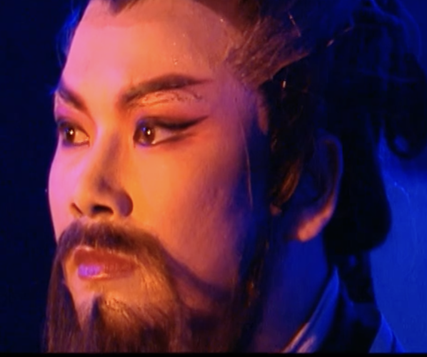
In his role as Cheng Ying, Zhao Zhigang sought to carve out a space for an alternate aesthetics of masculinity. His rendition was distinct from three other types of male portrayals. First, it contrasted with the soft/“feminine” masculinity crafted by the all-female Yue opera casts; at the same time, it also set itself apart from the convention of the “fragile scholar” characteristic of traditional scholar-beauty (caizi jiaren 才子佳人)” narratives; finally, it differed from the “old male role” (laosheng 老生) found in Beijing opera renditions of Cheng Ying (see CTC "The Orphan of Zhao" module 2003 and 2011). To realize such an alternate male identity, Zhao adopted an unconventional blend of male role types. Zhao was first trained in the “old male role” before specializing in the "young male role" (xiaosheng 小生) later in his career. In The Orphan, Zhao mixed the style of young male role type with the expressivity of the old male role type. Specifically, for the young Cheng Ying, Zhao leaned into the young male role. Later in the play, Zhao tapped into the moral aesthetics of the old male role to bring out Cheng Ying’s grounded, thoughtful, and often emotionally restrained temperament amidst political turmoil. Costuming is one way in which such a change manifests itself. The young male lead never wears a beard onstage; breaking with this convention, Zhao Zhigang wore a black-and-grey beard towards the end of play to indicate how much Cheng Ying had aged both due to the passage of time and on account of his emotional ordeals.
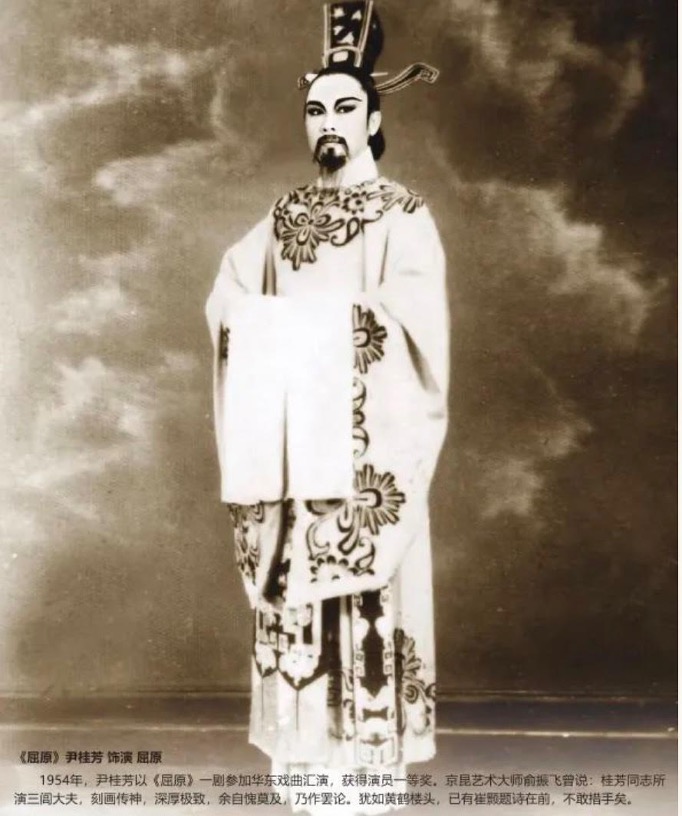
Zhao’s idiosyncratic mixing of role types had roots in his own training. Zhao’s teacher Yin Guifang 尹桂芳 (1919-2000), the creator of Yue opera’s “Yin School” 尹派,” was an important source of inspiration for Zhao’s portrayal of Cheng Ying. One of Yin’s unconventional signature roles was the 1954 portrayal of the lead role in Qu Yuan 屈原, a play written by famous feminist Republican-era writer Su Qing 苏青 (1914-1982) about the trials and tribulations of the famous poet and minister-in-exile. Despite initial opposition from fans unaccustomed to Yin’s typical romantic-scholar roles onstage, Yin Guifang’s performance of Qu Yuan was imbued with a certain historical and political gravitas absent from the normative scholar-beauty narratives of the Yue opera stage (see Fig. 2). Yin’s novel performance of the figure of Qu Yuan earned high praise from a range of cultural luminaries, including renowned dramatist Tian Han 田汉 (1898-1968), Beijing opera master Zhou Xinfang 周信芳 (1895-1975), Kun opera master Yu Zhenfei 俞振飞 (1902-1993) as well as the spoken drama and film star Zhao Dan 赵丹(1915-1980). In fact, Zhao Dan, who had previously performed Qu Yuan in a spoken drama, commended Yin Guifang for surpassing his own rendition of the poet-cum-statesman.
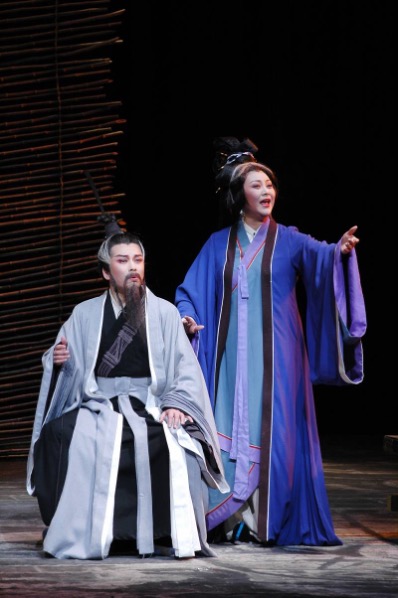
Interestingly, it is worth noting that the costume and makeup design of Zhao Zhigang’s Cheng Ying (see Fig. 2) closely resemble those of Yin Guifang’s Qu Yuan. Their visual similarities not only speak to Zhao’s efforts of honoring his teacher and carrying on the art of the Yin School, they also point to Zhao’s search for artistic legitimacy in his experimental rendition: he aspired to win the hearts of older-generation Yue opera fans despite his bold and modern innovations.PLOT SUMMARY
The Yue opera adaptation of The Orphan maintains the basic narrative arc of the original Yuan zaju except for the ending. To protect the titular orphan of Zhao, the only survivor of the Zhao family that the opera’s antagonist Tu’an Gu had sought to annihilate, several characters sacrifice their lives. Among them are Han Jue (the general), Gongsun Chujiu (the retired minister), and Cheng Ying’s own son. However, specific plot elements in the Yue opera adaptation differ significantly from the zaju plot. Similar to earlier Beijing Opera adaptations of The Orphan, playwright Yu Qingfeng centered the story around Cheng Ying, the physician (see CTC "The Orphan of Zhao" module 2003 and 2011). At the same time, Yu infused the ancient story with a modern, humanistic critique of revenge and carnage, while adding complexity to the characterization of the protagonists. Specifically, the adaptation explores the interiority and expressivity of various characters in response to the impending sacrifice of their own lives, adding a dramatic (and sometimes melodramatic) touch of poignancy and sorrow. Most importantly perhaps, the play ends with the orphan’s Hamlet-like indecision over whether or not to exact revenge amplified by Cheng Ying’s ultimate decision not to kill Tu’an Gu and instead moving on—or detaching--from revenge.
One of the interesting ways the Yue opera version differs from other renditions lies in its addition of the character of Cheng Ying’s wife. In the original zaju version and in many other Chinese opera versions, Cheng Ying’s wife is completely absent, focusing on the perspectives of male characters with the exception of the royal princess Zhuangji. The Yue opera version gives voice to Cheng Ying’s wife, a commoner (indicated by her vernacular language expressions and attire), but also a mother, counteracting the overtly patriarchal composition of the trio of male characters assuming the male lead role (zheng mo 正末) in the original zaju plot. Having just given birth to an infant, Cheng Ying’s wife at first—understandably—refuses to sacrifice her own child for the sake of the royal orphan. Cheng Ying’s wife’s seemingly selfish, yet “normal” initial resistance contrasts with the unfaltering obligation to save the royal familial lineage to which the other characters seem bound. Such a contrast serves multiple purposes. For one, such a refusal imparts an aesthetic of emotional realism to the play; for another, it discloses the internal conflict that all the characters, including Cheng Ying, must have gone through before choosing to make a heroic sacrifice. At the same time, the social status of the wife of Cheng Ying (commoner) contrasts with the status of Princess Zhuangji (royal family), thus stressing the play’s tragic nature: both are mothers to their new-born children, and yet one needs to give up the life of her baby for the sake of the other’s child. Ultimately, Cheng Ying’s agrees to sacrifice her child in an effort to faithfully support Cheng Ying as a virtuous wife and to alleviate his emotional agony when he is at his most vulnerable.
The orphan of Zhao’s indecision over killing Tu’an Gu is another departure from the original plot. The orphan of Zhao, when made aware of his true lineage, is asked to avenge his family’s carnage by killing Tu’an Gu. As in the original zaju, unaware of the orphan’s true identity, Tu’an Gu raised him as his adopted son. Rather than taking on the task of executing vengeance without any hesitation as in Peking opera version of The Orphan, (see CTC "The Orphan of Zhao" module 2003 and 2011), the Yue opera adaptation presents a Hamlet-line dilemma. The orphan asks, simultaneously of Tu’an Gu and of himself: “Are you really a benevolent adopted father or are you a cruel demon 你到底是一个仁慈的义父,还是一个残忍的恶魔?” In posing this question, the actor who plays the orphan adopts a clear spoken drama style of speech rather than the recitative style commonly found in operatic speech. He then becomes paralyzed by indecision: the responsibility to avenge generations of bloodshed and injustice is too overwhelming for a sixteen-year-old to handle. Consequently, the task of exacting revenge falls to Cheng Ying, who ultimately decides to end the cycle of retribution. In the module below, we will examine how Cheng Ying’s ethical choices blend with Zhao's inventive masculine aesthetic.THEME: Cheng Ying’s Vulnerability and Benevolent Heart
The Yue opera version of The Orphan of Zhao effectively utilizes new masculine expressions to retell an ancient story about choices, suffering, and ordinary, yet extraordinary human beings. Although Zhao Zhigang’s stated goal is to search for an aesthetic path that “masculinizes” the existing feminine aesthetics of Yue opera, in hindsight, the feminine aesthetics of Yue opera paradoxically add a dimension of softness and sensitivity that counteract the overly patriarchal configuration of the original Orphan of Zhao story. Such softened masculinity also facilitates the thematic of depicting Cheng Ying’s emotional complexity and vulnerability and the play’s call for a conscious embrace of humaneness over violence. We will examine four key moments in the play to highlight this mix.Scene 1: Cheng Ying's Vulnerable Moment
In the Peking opera rendition, Cheng Ying’s extreme pain after losing his own son is only temporarily indicated through a series of ritualized movements, in which he turbulently moves the water sleeves, while ferociously stirring up his beard (see CTC "The Orphan of Zhao" module 2003 and 2011). This set of movements abstractly signifies the extreme shock, pain, and emotional turmoil that Cheng Ying feels when witnessing how his son is smashed onto the ground. The Yue opera rendition instead dwells on Cheng Ying’s emotional struggle. For one, Cheng Ying has to keep the secret of the true identity of the child to himself; at the same time, he has to endure being reviled by everyone else for having seemingly betrayed the orphan after having sacrificed his own child. Here, Cheng Ying is portrayed at his most vulnerable: he is full of agony and on the brink of despair.
Cheng Ying’s song is delivered in the Xianxia tune (Xianxia diao 弦下调). In Yue opera, this melody is typically sung when a character finds themselves at an impasse or at a precarious juncture. It is frequently used before a character’s death, such as Liang Shanbo’s song delivered before his impending death in Yue opera’s signature play The Butterfly Lovers (Liang Shanbo yu Zhu Yingtai 梁山伯与祝英台). The rhythm of the tune is slower than the normal speed of Yue opera music. The melody’s tone is mournful and emotionally evocative, facilitating the expression of lingering sorrow as well as Cheng Ying’s inner brokenness. Zhao Zhigang’s virtuoso singing, known for its subtle fluidity (legato/portamento), along with the poetic lyrics effectively conveys Cheng Ying’s sorrow. The devotion to the depiction of Cheng Ying’s vulnerability here adds a certain softness to the masculinity that contrasts with the explicit expressions of agony in the Peking opera version (see CTC "The Orphan of Zhao" module 2003 and 2011).
Click to expand/collapse Translation Notes
Chinese Subtitles CTC Translation [弦下调]
程婴 (唱):夜沉沉 风悚悚 冷月如弯勾。[Xianxia tune]
Cheng Ying sings: The night is heavy, the wind is howling, the moon is like a crooked hook.程婴:人寂寂 心寥寥 寒霜压满头。 Cheng Ying: The people are silent, my heart is lonely, burdened with cold and frost. 程婴:黄叶飘 北雁归 安得旧巢在。 Cheng Ying: The yellow leaves have fallen, the wild geese have returned, did they ever find their old nest? 程婴:繁星移 流云走 何处可停留。 Cheng Ying: The stars vanish, the clouds float, where do they get to rest? 程婴:万家灯火 阴霾不再有。 Cheng Ying: In every other household, the lights are on, and the gloom is gone. 程婴:芸芸众生 天伦乐悠悠。 Cheng Ying: Now everyone else gets to joyfully reunite with their family. 程婴:此时我俨然阶下囚。 Cheng Ying: But right now it is as if I am a prisoner. 程婴:我今夜恰似孤魂游。 Cheng Ying: It is as if I am a lonely, floating ghost tonight. 程婴:叹人生多变命多舛。 Cheng Ying: Alas! Life is full of changes and fate full of misfortunes. 程婴:叹世间好景不长久。 Cheng Ying: Alas! The good times don't last long in this world. 程婴:便有千般委屈凭谁诉。 Cheng Ying: To whom can I tell my thousand grievances? 程婴:从此茫茫苦海独泛舟。 Cheng Ying: From now on, I will forever sail alone in the vast sea of misery. Scene 2: Cheng Ying's Forsaking of Revenge
The most critical departure from the zaju plot is the Yue opera play’s ending: Cheng Ying gives up on taking revenge against Tu’an Gu. As Cheng Ying places his hand on the sword needed to kill Tu’an Gu, the latter asks sarcastically: “Why don’t you be quick about it?" 你怎么还不下手. Adding to the dramatic tension, Cheng Ying’s wife urges him to kill Tu’an Gu as well: “Kill him and avenge our murdered son!" 快杀了他 替我们的儿子报仇. Then a huge onstage crowd escalates the request for the execution of Tu’an Gu, collectively chanting: “Kill him! Kill him!" 杀了他 杀了他
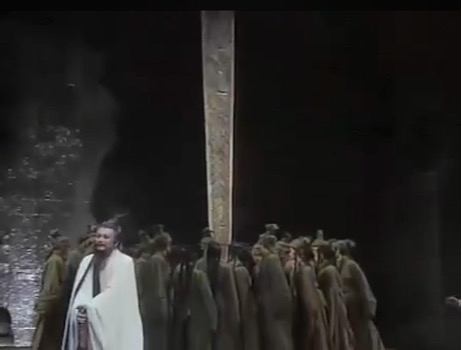
Strikingly, after much internal torment, Cheng Ying raises the sword, with which he is going to kill Tu’an Gu, and screams to the Heavens in agony: “How can I kill you [Tu’an Gu] with my own hands? How can I so cruelly take someone’s life just like you did?" 我怎么下得了手 我怎么下得了像你那样的毒手啊 Cheng Ying then thrusts the sword into the ground. The crowd quickly surrounds Tu’an Gu, and an enormous, towering sword slowly descends from above the stage into the center of the crowd as Tu’an Gu disappears amongst them.
The final scene reaches its climax when Cheng Ying poignantly yet reflexively sings out his intention of forsaking revenge. Notably, he delivers these lines a cappella without musical accompaniment. The lack of a pre-structured rhythm along with the absence of musical accompaniment (qingban 清板) as embellishment instill a sense of spontaneity and plainness, signaling what is being said comes straight from Cheng Ying’s heart. The freedom within the rhythm also musically embodies Cheng Ying’s detachment from hatred and sorrow. Moreover, the melody pays tribute to the aesthetically delicate Yin school as its tenderness underscores Cheng Ying’s emotional display, again registering a certain soft masculinity. Cheng Ying decides not to kill Tu’an Gu—or more precisely, to ultimately not be bound to an unquestioned mission of karmic revenge (yuan bao yuan 冤报冤). His refusal to resort to the violent resolution of revenge can also be seen as another aspect of his soft masculinity. As Cheng Ying sings, the giant sword that symbolically represents violence gradually ascends and disappears from the stage.
Click to expand/collapse Translation Notes
Chinese Subtitles CTC Translation [清板]
程婴 (唱):一段快意恩仇事。[A cappella]
Cheng Ying sings: A matter that does not require attachment to gratitude and hatred.程婴:何须刀剑又血腥? Cheng Ying: What's the need for swords and bloodshed? 程婴:冤冤相报几时了。 Cheng Ying: If we keep seeking revenge, when will this cycle finally end? 程婴:都随风吹雨飘零。 Cheng Ying: Let all be gone with the wind and the rain. Scene 3: The Physician's Benevolent Heart
Cheng Ying’s forsaking of revenge should not be understood as a simple decision, but one that arises from quite a complex mindset. Cheng Ying certainly thinks that Tu’an Gu deserves to be killed: his decision to spare Tu’an Gu’s life at the end does not mean that Cheng Ying decides to forgive Tu’an Gu personally for all his evil deeds, including the killing of Cheng’s own son. It is rather that Cheng decides to let go of his attachment to the mission of revenge that seeks justice for bloodshed by perpetrating further bloodshed. In other words, Cheng Ying chooses to move on because he chooses to be a humanist rather than someone who blindly follows the mission of loyalty. The rationale for such a change has at least two sources. For one, there is an old Chinese saying passed down from the ancient physician Sun Simiao 孙思邈, ancient “China’s King of Medicine” (Yaowang 药王): “The physician has a benevolent heart” (yizhe renxin 医者仁心), a phrase from the first work in Chinese history to comprehensively theorize and prescribe the ethics of physicians. Being benevolent (ren), a Confucian virtue and in this case an ethical requirement for a physician, means to treat others with humaneness. Cheng Ying decides to uphold the virtue at the heart of his profession as a commoner physician (zaoyi yiren 草泽医人), as he has upheld it throughout his life by healing people and saving lives. Second, the consciousness towards humanness very likely reflects China’s post-Cultural-Revolution theme of humanism, as explored in Wang Xiaoying’s other theatrical works. At the very end, we hear an ethereal female voice from the backstage, and again not accompanied with any music:Click to expand/collapse Translation Notes
Chinese Subtitles CTC Translation 幕后女声独唱: 天地间一个治病救人者。 Backstage Solo Female Singing: A healer between heaven and earth. 幕后女声独唱:只遗下一颗悬壶济世心。 Backstage Solo Female Singing: All he has left is the heart to help the world.
The onstage crowd — rarely seen on Chinese opera stage — assumes multiple functions. First, they represent a collective, legitimizing voice that urges Cheng Ying to kill Tu’an Gu, further contrasting Cheng Ying’s difficult personal decision to give up revenge. In the Yue opera, Cheng Ying is portrayed as a lonely soul--misunderstood by the crowd in the previous section of the play and choosing to not follow the crowd’s opinion at the end. Second, in the manner of a chorus in Greek tragedies, the chorus not only observes Cheng Ying’s actions throughout the play, but renders a verdict on Cheng Ying’s character at the end. Overall, the chorus ends the play with the ultimate message the Yue opera adaptation hopes to register in its reworking of the ancient story: subverting/inverting the theme of an unrelenting vendetta 冤报冤 as indicated in Ji Junxiang’s Yuan zaju title. In short, this contemporary version of The Orphan of Zhao in the 21st century is about letting go of hatred and bringing healing to humankind.Scene 4: Zhao Zhigang’s/Cheng Ying’s “Brechtian” Discarding of the Sword
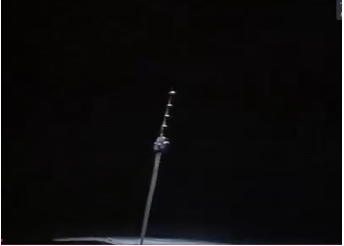
The value of non-violence is again reiterated during the standing ovation that the performance received from the audience. As the show ends, the stage fades to black and a spotlight highlights the sword previously buried in the ground by Cheng Ying. This is a deliberately silent, emphatic moment for the entire audience to reflect on the notion of revenge after viewing the play.
Significantly, after taking his bow as the actor at the standing ovation, Zhao Zhigang, while still wearing Cheng Ying’s costume, picks up the sword and throws it away carelessly, signaling complete detachment from hatred and bloodshed. At this moment, Zhao is not just portraying the character of Cheng Ying within the story. He is simultaneously Cheng Ying and himself. This breaking yet "doubling" of character constitutes a Brechtian moment, powerfully extending the themes of The Orphan of Zhao into a critical anti-violence message to the contemporary audience, while bringing healing to the pain and trauma of the past.WORKS CONSULTED: CLICK TO EXPAND/COLLAPSE
Jiang, Jin. Women Playing Men: Yue Opera and Social Change in Twentieth-Century Shanghai. Seattle: University of Washington Press, 2011.
Li Chenjie 李晨劼, dir. “Yitan mingliu zhi zhaoshi gu’er” 艺坛名流之赵氏孤儿, Cultural Celebrities, Baishi TV Channel. Bilibili Video, May 30th, 2021. https://www.bilibili.com/video/BV1ry4y1g7Despm_id_from=333.788.videopod.episodes&vd_source=5c5a9c22214b5444dce3315355b092a8&p=2
Ni Shenzhen 倪慎真, dir. “Xingzhe buwang laishi lu: zhao zhigang zhuanfang” 行者不忘来时路: 赵志刚专访. Kevin Hours, SMG Docu TV Channel, Oct 13th, 2024. https://www.youtube.com/watch?v=QtE3GTOnis8&list=PL9ZfdZUrxXduT-qPY77ya00mzy28_ruKU&index=37
University of Leeds Digital Library of Chinese Theatre. “The Orphan of Zhao.” 2014. https://chinesetheatre.leeds.ac.uk/productions/17
Wang Xiaoying 王晓鹰, dir. Yueju Zhaoshi Gu’er 越剧 赵氏孤儿, Shanghai Yue Opera House, 2005. https://youtu.be/FDfqk-BLNUw?si=C_TSeImRLy1c4Bsj
“Zhongren jiezui wo duxing: bainian yueju mingduan shangxi—Yin guifang pian” 众人皆醉我独醒: 百年越剧名段赏析——尹桂芳篇 (All are intoxicated I Alone Am Awake: A Hundred Years of Yue Opera Selected Known Pieces—Chapter of Yin Guifang), Meili Yueju Official Wechat Publication, July 21st, 2023. https://mp.weixin.qq.com/s/uG5XZP0Ql1E1CDYMawjiHQ
AUTHOR
Susanna Sun