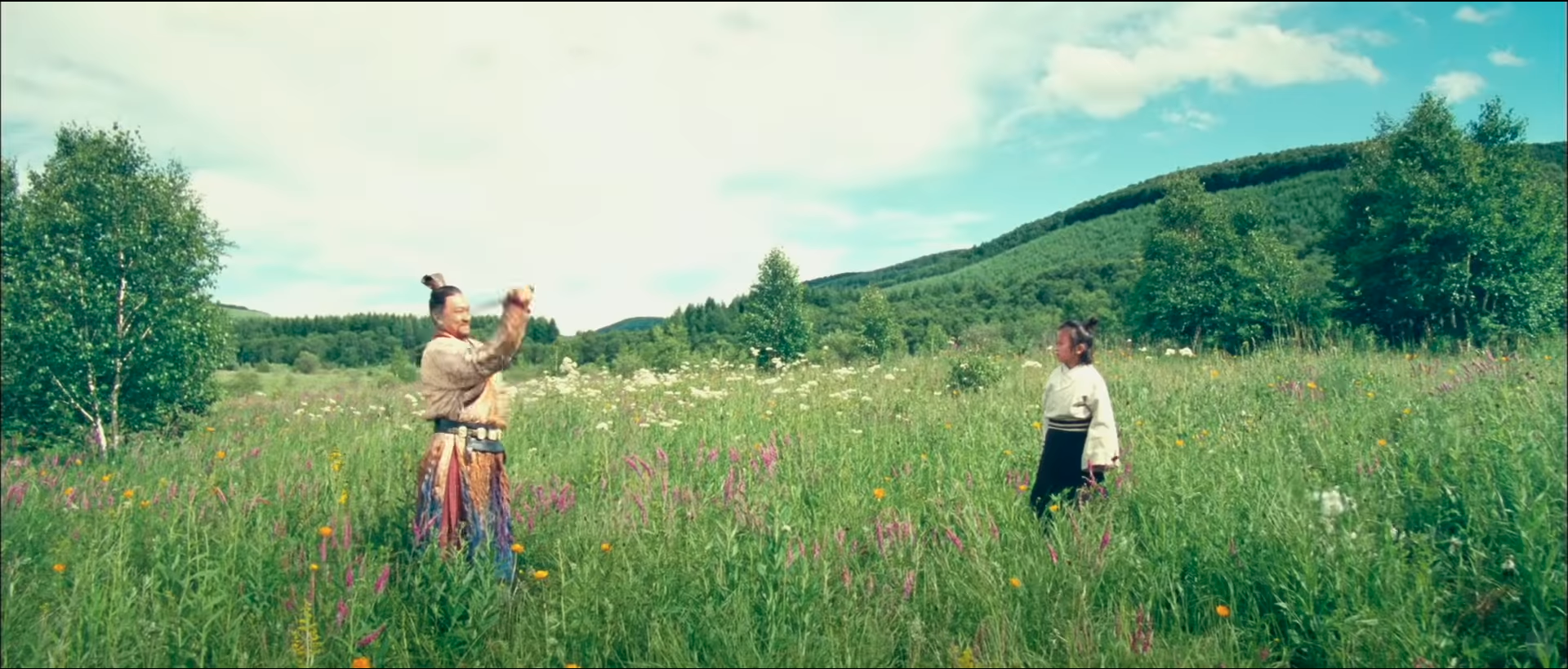
Sacrifice (2010)
1 media/MediaType_Film_1_thumb.png 2025-12-23T20:14:28+00:00 Jason Wang d86f87879d5d86129032e80721c14eb51cf319fb 1 1 Fig. 1: Learning to fight in Sacrifice (2010). plain 2025-12-23T20:14:28+00:00 A screenshot from the trailer of Sacrifice on Youtube.Credit: Screenshot by CTC Project Team. Jason Wang d86f87879d5d86129032e80721c14eb51cf319fb
This page is referenced by:
-
1
media/CTC_StaticBG.png
2021-11-22T17:22:09+00:00
Other Types of Film
17
plain
2025-12-30T20:40:57+00:00
Chinese filmmaking and traditional theater had an intimate relationship ever since the technology of filmmaking was introduced to Qing China at the tail end of the nineteenth century. Film scholars Chris Berry and Mary Farqhuar have gone so far as to observe that early Chinese filmmaking evinces an "operatic sensibility" (China On Screen: Cinema and Nation, 2006).
In the era of silent film, some of the earliest extant Chinese feature films rework traditional Chinese plays. In terms of actors, Peking and Kun Opera star Mei Lanfang, always on the ready to embrace new technologies to reinvent traditional Chinese theater, starred in rearranged scenes drawn from The Peony Pavilion. In terms of avantgard playwrights and scriptwriters, the husband and wife team of Hou Yao and Pu Shunqing reworked The Story of the Western Wing into a martial arts-cum-romance feature film by the same name (1927) that boldly experimented with new camera technology, shot sequences, and set designs.
In the era of the talkies, live action films developed around certain popular plays. In these types of films, the actors were typically not trained in the singing techniques associated with traditional Chinese theater and hence singing was kept to a minimum. Instead, dialogue dominated. A case in point would be Mulan Jojns the Army 木蘭從軍 (1939). However, despite the near-absence of operatic songs, the acting style may still show the impact of traditional Chinese theater, partly because film actors were sometimes trained by traditional theater teachers. Moreover, in terms of plot development, the fact that the screenwriter, Ouyang Yuqian, was an acclaimed Peking Opera performer and playwright, may also have been a factor in invoking theatrical culture.
In recent years, many plays have become part of a boom in full length live action and animation features. A case in point would be Chen Kaige's Sacrifice 赵氏孤儿 (2010). More often than not, such contemporaries versions seek to give the "old story" surprising twists that draw attention to neglected aspects of the plot or radically alter the interpretation of a particular protagonist.MODULES ON OTHER TYPES OF FILM
- The Romance of the Western Chamber 西厢記 (1927)
- Hua Mu Lan 木蘭從軍 (1939)
- "The Marking of Gender," a module on the 1939 live action film adaptation of Mulan.
- The Western Wing 西廂記 (1940)
- "Zhou Xuan’s Hongniang, the Intermedial Songstress," a module on the 1940 musical film adaptation.
- Hongniang (a.k.a. Soubrette) 红娘 (1999)
- "Hongniang’s Melodramatic Homecoming," a module on the 1999 PRC narrative film adaptation.
- The Peony Pavilion 遊園驚夢 (2001)
- Sacrifice 赵氏孤儿 (2010)
- "Father-Son Love," a module on a film adaptation of The Orphan of Zhao by director Chen Kaige 陈凯歌.